How IPL team selection works in practice: a reading list for fantasy captains
A captain walks out at the toss, scans the boundary rope and reads the dew on the square. The fantasy captain who built a team the night before is staring at a stat sheet that has already gone stale.
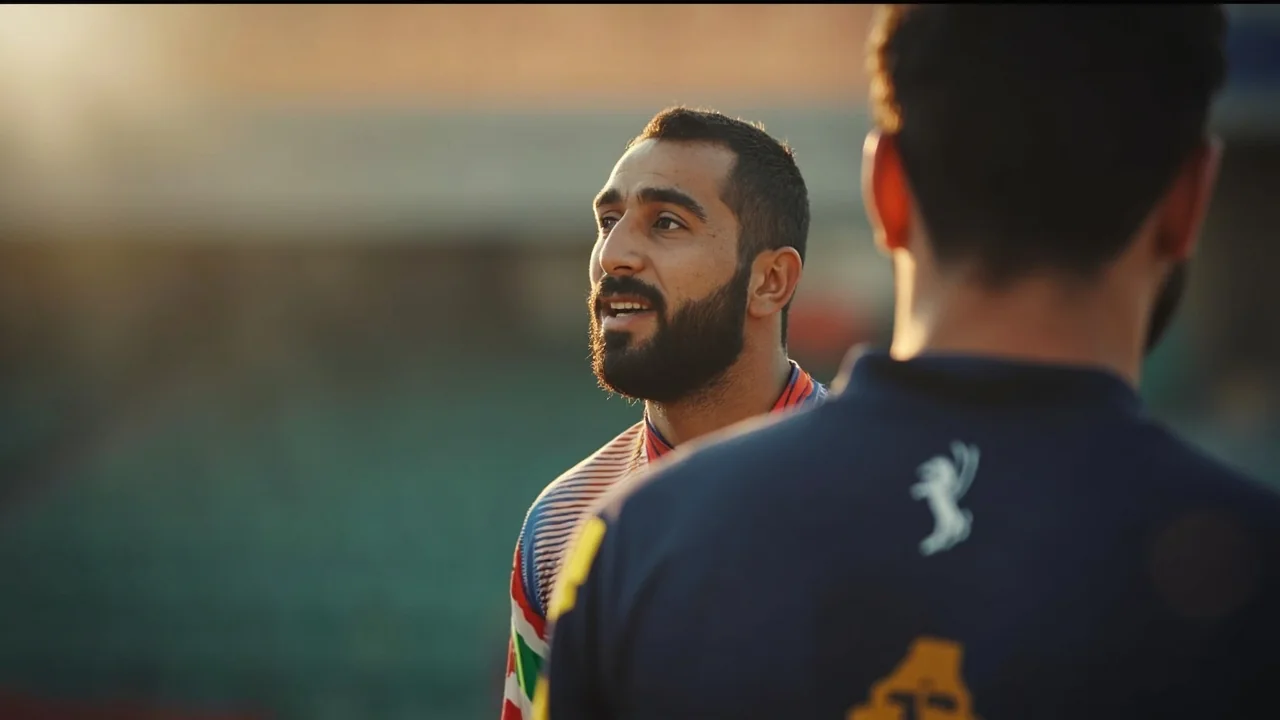
Most IPL previews treat the playing XI as a fixed fact handed down from the franchise. That is wrong in a useful way. The XI is the visible end of a private decision tree that runs through the head coach, the data analyst, the throwdown specialist, the physio and finally the captain at the toss. The fantasy captain who reads only the announced XI has skipped the steps where the actual choice was made.
This explainer walks through that decision tree the way a franchise walks through it — venue first, squad second, role third, captain fourth — and pairs each step with the kind of signal a fantasy captain should watch on the IPL teams desk. The aim is to leave you with a reading habit, not a single locked-in verdict on any current player.
Step one: the venue, before any name is read
Every franchise selection meeting starts with the ground, not the player list. The pitch report, the dew forecast, the boundary lengths and the time of day together decide what kind of XI the franchise is trying to build. A dry, gripping surface at the Wankhede invites three spinners and a batting deep enough to absorb a top-order wobble. A slow, low square at Chepauk in the second innings does the opposite. The captain who walks out at the toss has already had the venue read to them in the team hotel.
The fantasy equivalent is rarely this disciplined. The fantasy captain reads the team-sheet graphic, picks two players from the most-owned list and hopes the maths works out. The franchise captain reads the square, the overhead conditions and the bowling workload before they pick the first name. The order matters: venue shapes squad shape, squad shape narrows the candidate list, candidate list meets role math, role math meets the toss.
What to watch on the teams desk
Each IPL franchise profile should publish the venue profile before a fixture, not after. The three useful numbers are the average first-innings score at the venue in the current season, the proportion of matches won batting first and the dew window — usually the last 6–8 overs where the ball stops gripping. If a franchise profile skips these, treat the rest of its team notes with the same caution.
Step two: the squad, not the eleven
Franchises do not pick a starting XI; they pick a 16–18 man squad from which the XI falls out. The squad has been signed months in advance, and most of the selection pressure is therefore backward-looking. Who was bought at the auction, who was retained, who was traded in, who carried an injury through the previous season and who has been parked on the bench long enough that match-fitness is the open question.
The fantasy captain has access to the same squad list but rarely applies the same lens. A player on the bench is not a non-player; a player retained through three seasons is rarely a coincidence; a player bought in the auction for a specific role is not interchangeable with another player bought for a different role. The squad is a set of constraints. The XI is the franchise solving those constraints.

How to read a squad announcement
- Look at who is missing before you look at who is named. A regular starter dropped for a single fixture is news; a regular starter on the bench is a message about match-fitness.
- Cross-check the impact-player slot. A team that names an all-rounder as Impact Player is signalling they want batting depth at the cost of a fifth bowler.
- Count the overseas slots. Four overseas in the XI is the modern default; a fifth is a captaincy statement, not a tactical accident.
Step three: role math, not star power
The most common selection mistake on the fantasy side is reading the team-sheet graphic as a list of stars. A franchise does not pick stars; it picks roles, and it then asks which name fits each role best on this surface, under this dew forecast, against this opposition. Two stars competing for the same role is a real problem, not a redundancy to be celebrated.
Role math starts with the batting order. Who opens, who bats at three, who floats, who finishes. It then runs through the bowling card: powerplay, middle, death. It then checks the fielding balance — how many catches can be taken in the cordon, how many runs saved in the deep. A team with two quality finishers and no powerplay wickets is a different team from one with two powerplay bowlers and a brittle finish. Both can be right.
Decision tree: who is the captain's pick?
If the surface grips
Spinners lead the role math. The captain's pick is usually a batter who plays spin cleanly and rotates strike in the middle, not a six-hitter.
If the surface is flat
Death-overs bowling leads the role math. The captain's pick is a batter who hits straight or a bowler who nails the wide yorker under pressure.
If dew is heavy
Chasing is favoured. The captain's pick is a top-order batter who plays the new ball, not a pinch-hitter held back for the death.
If dew is light
Batting first is favoured. The captain's pick is a middle-overs anchor who can rebuild after a powerplay wicket.
Step four: the captain, in two layers
The franchise captain and the fantasy captain both pick two captains — one for safety, one for upside. The franchise captain is reading the role math from step three and choosing the player whose ceiling sits at the top of the role hierarchy. The fantasy captain is reading the same role math plus an ownership curve, and choosing the player whose ceiling exceeds the ownership share.
The mistake on both sides is to pick the most-owned name. The franchise captain is not picking the most-owned name because the most-owned name is a publicly available fact; if the franchise captain's pick coincides with public opinion on more than half the fixtures, the captaincy is being run by the same analytics the public is reading. The fantasy captain who copies that pick is therefore copying the public reading, not the franchise reading.
What a captain actually changes
A captain changes three things on the field: the batting order, the bowling rotation and the field. Each of these is a small lever, but they compound. A captain who bumps a batter up the order by one slot changes that batter's scoring arc by roughly ten balls. A captain who gives a death bowler the 18th over instead of the 16th changes the expected wicket probability by a measurable amount. A captain who sets a catching fielder at a different position changes the dot-ball rate by a smaller but still real amount.
The fantasy captain cannot set a field, but they can pick the franchise captain who is most likely to make these small calls well. That is a different question from picking the best batter. It is also a different question from picking the most popular captain.

Step five: the toss, and what the toss is not
The toss is the part of the decision tree the public gets to watch, and that visibility is misleading. The toss decision is the last step in the venue math, not the first. A captain who calls heads and chooses to field is not making a fresh call; they are confirming what the dew window and the boundary lengths have already decided. A captain who chooses to bat is doing the same.
The fantasy captain who treats the toss as the moment to rebuild a team has read the tree in the wrong order. By the toss, the venue is fixed, the squad is locked, the role math is settled and the captain pick is named. The only remaining variable is the order of bat and bowl, and that variable is small. A fantasy team that needs the toss to make sense is a fantasy team built on the wrong foundation.
Where the teams desk earns its keep
An IPL teams desk earns its keep by publishing the inputs to the decision tree, not by guessing its outputs. The inputs are venue profiles, squad lists with annotations, role assignments and the captaincy history of the named players. The outputs — the announced XI, the captain's call, the impact-player slot — are a single fact per fixture, and they are easy to copy. The inputs are the harder part, and that is where the reading habit lives.
A useful test: read a franchise profile and try to predict the announced XI without scrolling. If you can, the franchise profile has done its job. If you cannot, the franchise profile has published a squad list and called it analysis. The reading list you build up over a season is the difference between the two.
Reading checklist — three passes through any IPL teams page
- Venue pass: average first-innings score, batting-first win rate, dew window. If absent, treat the rest as provisional.
- Squad pass: who is missing, who is named, what the impact-player slotting tells you about role priorities.
- Captaincy pass: who has captained this franchise in the last six fixtures, what the captaincy history says about role allocation.
What a verified reading can and cannot promise
An evergreen explainer like this one cannot name a current captain pick, because the verified record does not include today's toss, today's dew or today's squad announcement. It can name the structure of the decision, the role of the venue and the order in which a franchise reaches its XI. That structure does not change between seasons.
What changes between seasons is the personnel. The names move through the auction, the trade window and the impact-player rule. The tree does not move. The fantasy captain who learns the tree can re-staff it whenever the squad list updates; the fantasy captain who memorises a name list is rebuilding from scratch at the next mega auction.
How this fits the standing team profiles
The IPL teams desk on CricketChallenge is built around ten standing franchise profiles and the country profiles that feed them. Each franchise profile carries the venue profile, the current squad, the recent role allocations and the captaincy history of the named players. The country profiles carry the player pool from which the franchises draw at the auction and through the season.
The reading habit described above works at both levels. At the franchise level it tells you who to expect in the announced XI. At the country level it tells you which players the next auction might value, which retirements are about to open a squad slot and which role shapes the franchises are quietly reshaping. The decision tree is the same; only the inputs change.
Source: This is a bounded evergreen explainer prepared after the verified-source search returned no usable current report. It draws only on the durable structure of IPL team selection, the standing IPL franchise and country profiles, and the league rules (Impact Player, four-overseas limit, salary cap) that govern the decision tree. No current event, offer, score, quotation, captaincy call or fixture outcome is claimed.
For venue reads, squad notes and role assignments across the standing IPL franchises, the teams desk collects the editorial notes in one place, with country profiles alongside the franchise profiles and a fresh update cadence that follows verified announcements rather than rumours.